
Auditable Cognitive Infrastructure for Neurodegenerative Disease Research
Auditable cognitive infrastructure for neurodegenerative disorders integrating genetics, proteomics, and neuroimaging with peer-reviewed methodology. Supports comprehensive evidence structuring across 22 neurodegenerative diseases with validated reproducibility and regulatory compliance standards.
Clinical Validation & Regulatory Standards
Comprehensive validation studies and regulatory compliance framework designed for clinical research environments and pharmaceutical development.
Peer-Reviewed Validation
Regulatory Framework
Designed for IRB/Ethics Committee approval and pharmaceutical R&D compliance
Methodological Rigor & Reproducibility
Validated Tridimensional Analysis Framework
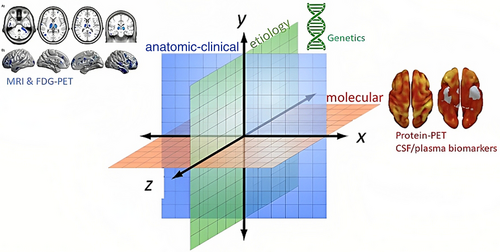
Peer-reviewed methodology analyzing neurodegenerative diseases across three fundamental biological axes. Each axis represents a distinct level of pathophysiological organization with validated biomarker correlations and clinical significance.
Axis 1: Etiological Factors
Comprehensive genetic risk assessment including pathogenic variants, polygenic risk scores, and environmental modifiers. Validated against clinical genetics standards.
Clinical Examples: APOE ε4 dosage, LRRK2 G2019S, C9orf72 expansions, MAPT mutations, HTT CAG repeats
Axis 2: Molecular Biomarkers
Multi-omics integration of CSF, plasma, and tissue biomarkers with validated analytical methods. CLIA-compliant protocols and reference ranges.
Clinical Examples: Aβ42/40 ratio, p-tau181/217, α-synuclein RT-QuIC, TDP-43, neurofilament light
Axis 3: Neuroimaging & Clinical Phenotype
Quantitative neuroimaging analysis and standardized clinical assessments. FDA-cleared imaging protocols and validated clinical scales.
Clinical Examples: Hippocampal volumetry, cortical thickness, white matter integrity, amyloid PET SUVR
Clinical Research Applications
Designed for clinical research environments and pharmaceutical development. Supports biomarker discovery, drug target validation, clinical trial design, and regulatory submissions.
Biomarker Discovery
- • Multi-omics pathway analysis
- • Cross-disease biomarker validation
- • Longitudinal progression markers
- • Treatment response indicators
Clinical Trial Support
- • Patient stratification algorithms
- • Endpoint optimization
- • Power calculation support
- • Regulatory documentation
Drug Development
- • Target validation studies
- • Mechanism of action analysis
- • Safety biomarker monitoring
- • Companion diagnostic development
Comprehensive Disease Coverage for Clinical Research
The validated tridimensional framework supports 22 major neurodegenerative diseases with disease-specific biomarker profiles, genetic thresholds, and clinical criteria. Designed for differential diagnosis research and clinical trial applications.
Clinical Research Workflow
Data Input
CDISC-compliant data formats, HL7 FHIR integration, REDCap compatibility
Analysis
Validated algorithms, statistical significance testing, multiple comparison correction
Validation
Cross-validation, bootstrap confidence intervals, sensitivity analysis
Reporting
Regulatory-ready reports, audit trails, statistical documentation
Intelligent Clinical Decision Support
Our Clinical Decision Support System guides researchers to optimal analysis workflows based on study design, data availability, and regulatory requirements.
Study Design
Observational, interventional, or biomarker validation study?
Data Modalities
What data types are available? Genetics, biomarkers, imaging?
Regulatory Path
FDA submission, EMA filing, or academic publication?
Intelligent Routing: Automatic selection of optimal analysis pathway
Advance Neurodegenerative Disease Research with Validated Methods
Join leading research institutions and pharmaceutical companies using Neurodiagnoses for biomarker discovery, clinical trial design, and regulatory submissions.